
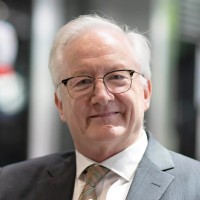
Professor Stephen Garton AM FAHA FASSA FRAHS FRSN
Chair, Board of Directors
ACOLA
Chair’s Report
The past year has brought significant change to Australia’s research, science and innovation system, with renewed attention to how we coordinate expertise, invest in research and translate knowledge into lasting public benefit.
Ambitious Australia, the final report of the Government’s Strategic Examination of Research and Development, set out a long-term blueprint for a more focused and better coordinated system. The Government and the Minister’s commitment to establish a National Resilience and Science Council provides a foundation for reform. Alongside it, increased investment through the Medical Research Future Fund and the conclusion of negotiations on Australia’s association to Horizon Europe offers new opportunities to translate research into practice and strengthen international collaboration.
The success of these reforms will depend on bringing different kinds of knowledge together. The challenges facing Australia, from the net zero transition to health, resilience and social cohesion, managing the impact of AI, all cross disciplinary boundaries. Addressing them requires the sciences, engineering, health and medicine, social sciences and humanities to work together from the outset.
As governments, researchers and industry consider how these reforms should be implemented, the need for independent, trusted and multi-disciplinary advice becomes increasingly important. This is where ACOLA makes a distinctive contribution. Drawing on the collective expertise of more than 3,500 Fellows across our five member Learned Academies, we bring independent, multidisciplinary and interdisciplinary perspectives to complex national questions. We connect research with policy and practice, creating opportunities for experts, decision-makers and communities to shape responses together.
Our energy transition work demonstrated this approach during the year. The Powering Fairness report launch brought vulnerability and justice into focus, while the Accelerate 2035 Summit convened more than 80 experts to help shape national
research priorities. Both reinforced the importance of understanding people and communities alongside the technologies driving Australia’s transition.
Another important area of work during the year was the Disability Responsiveness Program. Bringing together research evidence, lived experience and professional expertise, the program builds on ACOLA’s previous work in this area through the development of practical toolkits and a National Roadmap to support improved outcomes for people with disability across health, education and justice.
As national reforms take shape, ACOLA stands ready to assist government and sector partners in building a research and innovation system that draws on the full breadth of Australian expertise. Our experience shows the value of connecting disciplines and perspectives around a shared purpose and keeping the people affected by change central to the response.
I thank my fellow Directors and the Presidents, Fellows and staff of our member Academies for their partnership and contributions throughout the year. I acknowledge the leadership of our former Chief Executive Officer (CEO), Prerana Mehta, and thank our Executive Director, Dr Lauren Palmer, and the ACOLA team for their professionalism and commitment through a year of transition.
The task ahead is not simply to generate new knowledge, but to ensure Australia can draw on the full breadth of expertise needed to address complex challenges. ACOLA is well placed to support that effort.