Government, research institutions and industry need to coordinate the direction of research investment and deployment to accelerate the energy transition to the pace required to meet Australia’s 2035 target and net zero by 2050.
“The spark has been lit — the research sector is ready to help accelerate Australia’s energy transition. But the system is still fragmented”. “Without a coordinated national research agenda, Australia risks slowing transition delivery and forfeiting the economic, social, and security benefits generated by net zero,”
Prerana Mehta, CEO / Australian Council of Learned Academies
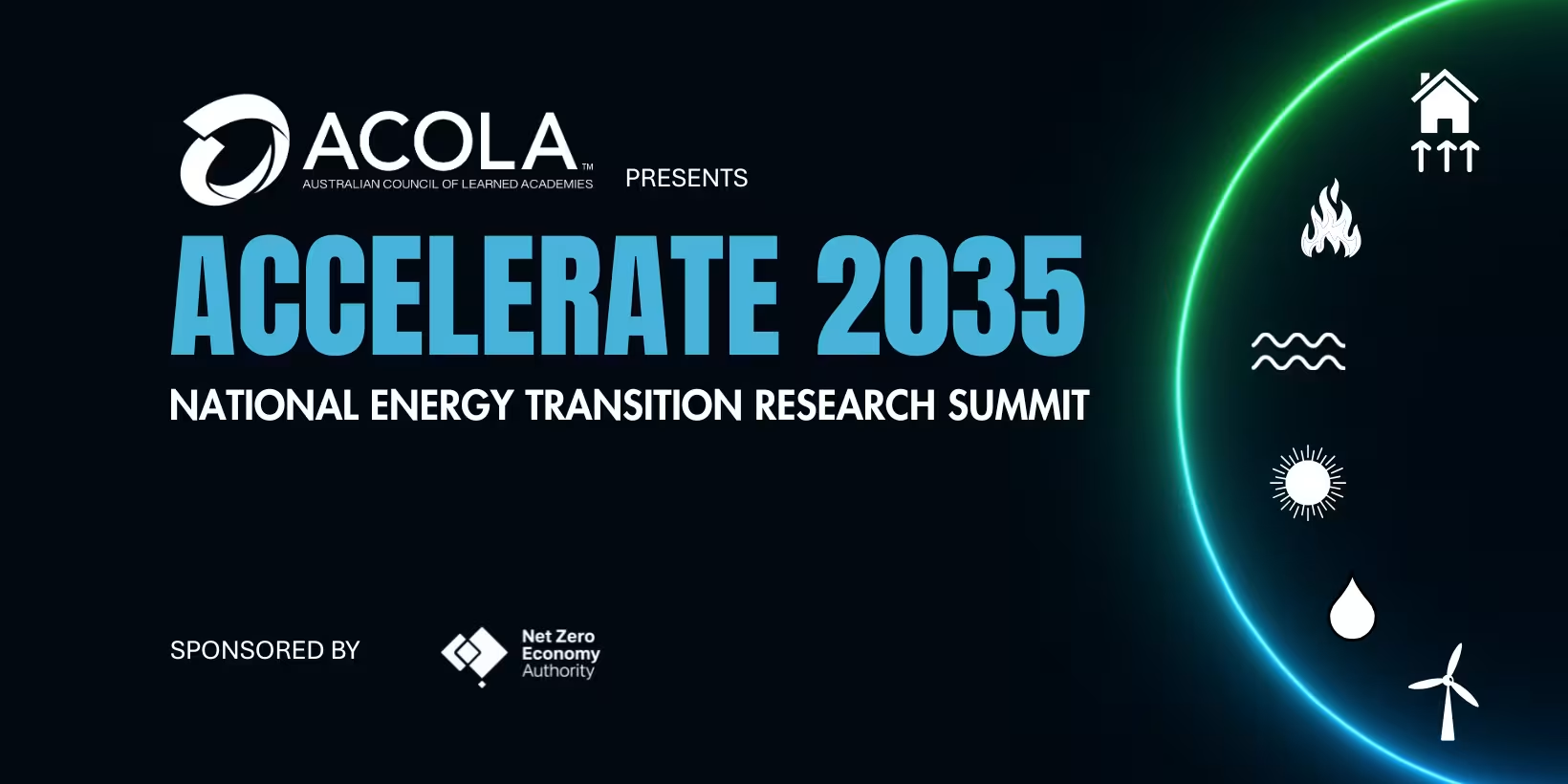
Last week in Canberra, the Australian Council of Learned Academies’ (ACOLA) ACCELERATE 2035 National Energy Transition Research Summit highlighted the urgency of this challenge. The Summit convened cross-sector leaders from research, government, industry and regulation, alongside Australia’s Learned Academies, to undertake a coordinated national reset of Australia’s energy transition research priorities.
The Summit heard from leading voices on Australia’s energy transition, including David Shankey, CEO of the Net Zero Economy Authority, Tony Haymet FTSE, Australia’s Chief Scientist Professor, Kath Rowley, CEO of the Climate Change Authority, Emeritus Professor Roy Green, University of Technology Special Innovation Advisor, Nicola Falcon, Executive General Manager of System Design at AEMO, and Louisa Kinnear, CEO of the Australian Energy Council.
To date, energy systems decarbonisation has been driven predominantly by falling renewable technology and storage costs, strong solar and wind deployment and targeted policy reforms. The challenge to 2035 is not only ensuring that the transition occurs at a rapid pace — it is also ensuring that the benefits of a clean energy future are widely distributed and reduce existing inequities.
A central insight emerged from the Summit: the next decade of the energy transition will be defined as much by the impact on and the actions of society, as by technological progress. While this linkage is not new, the shift in emphasis towards human-centred challenges at the Summit reflects where industry, academia and government are heading.
Meaningful engagement – through partnership with communities, especially Aboriginal and Torres Strait Islander communities, as well as regional and rural areas – emerged as essential to progress moving forward, particularly in fostering durable social confidence and equitable decision-making around infrastructure deployment.
Summit discussions reinforced the critical role of researchers in identifying pathways to implement an equitable transition — ensuring the benefits and burdens of the transition are shared fairly and developed with effective strategies to counter misinformation.
“Regional transition only accelerates when access to capital, land, skills and community support move together. If we don’t solve those fundamentals as a system, regions stall”
David Shankey, CEO / Net Zero Economy Authority
Discussions at the Summit will inform the development of a National Roadmap for Australia’s energy transition research — identifying priority research questions, critical timeframes and coordination opportunities needed to guide the next phase of the transition.
About the Summit:
On Friday 27 February, the Australian Council of Learned Academies (ACOLA) in partnership with the Net Zero Economy Authority convened cross-sector leaders from research, government, industry and regulation, alongside Australia’s Learned Academies, to:
- Identify the critical energy research required to meet Australia’s 2030, 2035 and 2050 targets
- Survey the research gaps and articulate the most pressing challenges, risks, and opportunities across the energy system
- Bring together insights from science, engineering, economics, social sciences, First Nations engagement, regulation, finance and industry innovation
- Establish the foundational research directions essential for guiding policy, investment and national decision-making for an effective energy transition
- Ensure Australia moves forward with a holistic, cross-sector approach grounded in evidence and shared priorities
- Summit outputs will feed into a new Australian Energy Transition Research Plan 2026, aligned with Net Zero policies and timed to inform COP31 discussions.
Participants took part in structured discussions framed around the decarbonisation pathways across the six sectors underpinning Australia’s Net Zero Plan. Participants identified the top challenges and opportunities facing Australia’s energy transition, including where and why coordinated research can deliver the greatest impact.
Media notes:
For interview requests with Summit speakers, Prerana Mehta or ACOLA AETRP chair Prof Ken Baldwin, please contact ACOLA, Engagement Manager, Ramesha Perera at: E: ramesha.perera@acola.org.au P: 0491 911 288
For all other enquiries please email: info@acola.org.au