

National Energy Transition Research Roadmap
Government, research institutions and industry need to coordinate the direction of research investment and deployment to accelerate the energy transition to the pace required to meet Australia’s 2035 target and net zero by 2050. ACOLA is working to do just that.
Learn moreEvidence-based Policy
We bring together over 3,500 of the nation’s leading experts working in health, sciences, engineering, humanities and social sciences to provide trusted, interdisciplinary advice to inform government, industry and community.

Net zero transition
Shaping research and policy pathways for Australia's net zero transition.

National Resilience
Evidence-based advice to prepare for and respond to national challenges.

Care economy
Strengthening care systems through interdisciplinary research and collaboration.

International
Connecting Australian expertise with global research and policy agendas.
Reports
Explore independent, interdisciplinary research and expert advice shaping national policy and driving innovative solutions to Australia’s most complex challenges.

Examining JUST Energy Metrics: Exploring Australian research opportunities
While the nation pushes toward ambitious 2030 energy targets, one challenge remains largely unresolved: how do we measure whether the transition is fair?
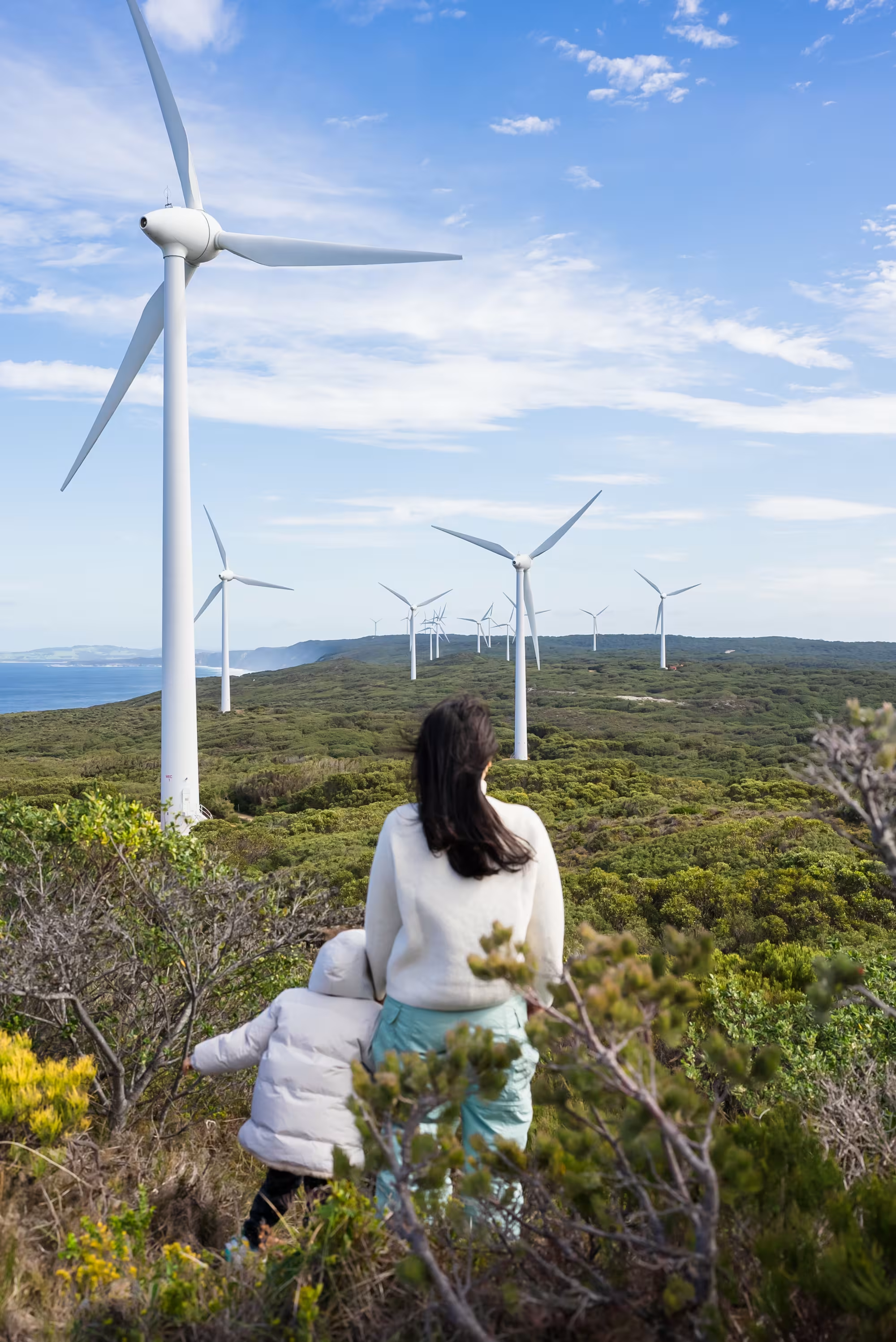
Vulnerability and Australia’s Energy Transition
While much attention has been given to technologies and emissions targets, far less has focused on a critical question: who is most vulnerable to the impacts of the transition, and why?
Latest Submissions
We provide independent expert advice on issues of national importance.
ACOLA AETRP response to Strategic Examination of R&D Review
ACOLA steering committee for the Australian Energy Transition Research Plan (AETRP) have been analysing data on Australian government R&D spending on energy.
ACOLA’s response to the Policy Review of the National Competitive Grants Program
The Australian Research Council have released the Discussion Paper: A New Plan for ARC-Funded Research.
Strategic Examination of R&D Review Discussion Paper
ACOLA welcomes the opportunity to respond to the Strategic Examination of Research and Development (SERD) Review discussion paper.
Latest News
Stay updated with our news.
Accelerate 2035: Resetting Australia’s Research Priorities for a Human-Centred Energy Transition
Australia’s new 2035 emission target exposes gaps in Australia’s energy transition R&D system.

New ACOLA Reports Chart Path to a Fair and Inclusive Energy Transition
New ACOLA Reports Chart Path to a Fair and Inclusive Energy Transition
ACOLA to Lead $3M National Program Advancing Disability Inclusion and Workforce Capability
ACOLA to Lead $3M National Program Advancing Disability Inclusion and Workforce Capability