
As a dynamic economy in a rapidly developing region, Australia seeks to utilise all available resources to manage regional opportunities and risks for growth and stability.
Australia’s international business relations are strengthened by the diasporas, of which Asian Australians are an important part. They utilise cultural, linguistic and other skills to build people-people links across diverse areas including science, culture, business and trade. However many of the potential benefits of business diaspora connections are under utilised, under developed or unknown.
Focusing on the Chinese and Indian business diasporas in Australia, this project will explore the extent, diversity and nature of business diaspora linkages.
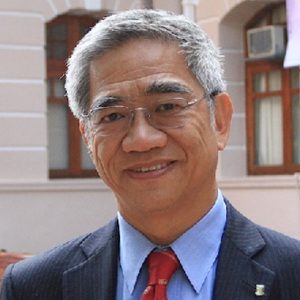
"For Australia to realise its diaspora advantage, it needs to develop a comprehensive, bi-partisan national approach that builds on successes to date, and the entrepreneurial energies that Asian Australian business communities clearly have."
Professor Fazal Rizvi / Co-Chair of the Expert Working Group
This Securing Australia’s Future project 11, Australia’s Diaspora Advantage: Realising the potential for building transnational business networks with Asia, explores the phenomenon and potential of Australian Asian business diasporas.
The main aims of this report are to:
- map the Asian business diasporas in Australia
- explore how these diasporas participate and contribute to enterprise and innovation
- identify the challenges they confront
- discuss some ways in which governments, industries and associations
might address these challenges.
Rich potential
Finding 1: Australia’s Asian business diasporas are a rich source of innovation, enterprise and entrepreneurialism. Their growing size and contribution to the Australian economy, as well as their potential, is an under-utilised resource for further enhancing Australia’s engagement with Asia.
New conceptual thinking
Finding 2: Beyond the traditional concepts of migration and migrant settlement, the broader notion of diaspora more adequately describes how people of Asian origins living and working in Australia maintain emotional and cultural links with their country of origin and use their transnational networks to extend business activities and opportunities.
The diaspora advantage
Finding 3: The idea of diaspora advantage suggests how the linguistic skills, cultural knowledge and global networks constitute an advantage that not only benefits the members of the Asian diasporas but also helps Australia extend its economic links with Asia, and promotes a culture of innovation within the transnational economic space.
Representation of Australia’s Asian business diasporas
Finding 4: For Australia to further benefit from its diaspora advantage, its governments, businesses, and organisations need to ensure greater representation and participation of the Asian diasporas in the development of policies and programs aimed at strengthening Australia’s economic, political and cultural relations with Asia.
Policy and program development
Finding 5: While most advanced economies have developed policies to attract highly skilled migrants, they have yet to develop strategies that accommodate the changing nature of the business diasporas’ experiences, motivations and advantages in a globally interconnected economy. Australia is well positioned to take a leading role in developing such strategies.
Growth of diaspora populations
Finding 6: The estimated 1.7 million-strong Chinese and Indian diasporas in Australia are growing rapidly in size and significance. They are highly diverse, internally differentiated by religion, culture, language, politics and experience. They include a greater proportion of educated and highly skilled individuals who are globally networked. These networks are a major source of business opportunities, innovation and entrepreneurialism.
Mapping and modelling
Finding 7: While qualitative interviews indicate the significant contribution Asian business diasporas make to the Australian economy, this contribution has yet to be measured quantitatively through economic modelling. However, such modelling requires new approaches to collecting, using and analysing data, as current data sets do not fully take into account diaspora experiences, flows and networks.
Barriers and challenges
Finding 8: While the Asian business diasporas display an ability to negotiate the complexities of the transnational economic space, greater awareness of the many barriers they face is also needed. This will guide a better understanding of how cultural, national and regional differences influence approaches to business.
Conduits for culture, commerce and connections
Finding 9: There is a compelling case for bilateral councils and business associations to engage Australia’s Asian diasporas to enhance connections between investors, entrepreneurs and industry with innovation, research and science infrastructures and programs.
Strategies to use diaspora expertise for mutual benefit
Finding 10: The Chinese and Indian governments recognise the importance of their diasporas abroad and have begun to develop strategies to use expertise to increase trade, investment and knowledge transfer. Australia needs to develop similar ways of using its own diaspora resources for research, cultural and business collaborations in ways that are mutually beneficial.
Asia capability and education
Finding 11: While science, technology, engineering and mathematics (STEM) education is positioned as a policy priority, the success of Australia’s Chinese and Indian business diasporas point to the equal importance of the humanities, arts and social science (HASS) education in entrepreneurialism and business skills, Asian languages, and historical and cultural studies, as critical components of Asia capability.
Co-ordinated national approach to diaspora policy
Finding 12: The case studies of Australia’s Chinese and Indian business diasporas indicate an opportunity for Australia to develop a comprehensive and coherent policy that acknowledges the contribution of all of its diasporas and considers ways in which Australia may realise its diaspora advantage to further extend its economic links globally.
A potent economic force
Australia’s Asian business diasporas are a rich source of innovation, enterprise and entrepreneurialism. Yet they are under-utilised. They have significant potential to further enhance Australia’s economic engagement with Asia and help the nation’s economy to thrive, for the benefit of all Australians.
The Diversity Council Australia estimates that approximately 17 per cent of people living and working in Australia (four million people) identify as being of Asian origin. This report estimates that the Chinese diaspora in Australia to be around 1.2 million, and the Indian diaspora 610,000 (Liu 2016, p. 4). Australia’s Asian diasporas are well-educated and are driving new developments in knowledge-intense and technology intense industries. They are stimulating and influencing trade, investment, technological innovation and knowledge flows between Australia and Asia. They are a potent economic force for Australia. Within the globalised economy, the flow of ideas, capital and people is accelerating. This is resulting in new modes of investment, production, distribution and consumption. These transformations are likely to produce new trade opportunities for Australia, especially as it transitions from a reliance on resources towards an economy shaped by the worldwide demand for less tangible, knowledge-based products and services.
With Asia becoming a major engine of the global economy, this report, Australia’s Diaspora Advantage: Realising the potential for building transnational business networks with Asia, explores the potential of Australian Asian diasporas to deepen economic links with Asia. It maps the Asian business diasporas in Australia; illustrates how they participate and contribute to enterprise and innovation; identifies the challenges they confront; and discusses ways in which governments, industries and associations might address these challenges.
A new way of viewing migration and multiculturalism
In this report, the concept of diasporas is used to capture the diversity, dynamism and mobility of Australia’s Asian communities and their transnational connectivity in ways that traditional notions of migration and migrant settlement do not. Diaspora communities may be locally embedded within Australia, but often remain emotionally attached to their countries of family origin, and potentially to culturally aligned groups around the world. This broader definition of diasporas includes first generation immigrants as well as people who identify with a particular cultural origin, no matter how long they, or previous generations of their family, have lived in Australia. Australia’s Asian diasporas describes communities of Asian backgrounds living and working in Australia, including people of mixed ethnic backgrounds and temporary residents in Australia for work or study, and those who remain connected to Australia even when residing elsewhere.
An opportunity to maximise Australia’s economic future in Asia
With advances in transport and communication technologies, members of diasporas can easily connect with their countries of family origin. They can develop the transnational cultural, political and commercial links that have become a feature of the global economy—the importance of which is not yet widely understood. This report, contributes to that understanding. It focuses on those within Australia’s Asian diasporas who are engaged in business, trade and investment activities—the business diasporas. It presents evidence that these business diasporas are using their language capabilities, cultural undestanding and global networks to accelerate the circulation of ideas, opportunities and people. Enthusiasm, entrepreneurial energy and preparedness to take risks often drives these business activities. This is their diaspora advantage. Australia can do much more to realise this advantage in enhancing and maximising its economic future in Asia.
This report builds on the insights of an earlier Australian Council of Learned Academies (ACOLA) report, Smart Engagement with Asia: Leveraging language, research and culture (Ang, Tambiah and Mar, 2015). That report describes the various ways in which Asian diasporas in Australia facilitate and strengthen science and research and cultural collaborations between Australia and Asia. It encourages Australia to develop mechanisms to better realise the considerable resources of its Asian diasporas, in long-term and mutually beneficial ways. This idea echoes previous Securing Australia Future (SAF) studies, especially Australia’s Competitive Advantage, which stresses the need to develop, enhance and use all of the nation’s capabilities and resources. It suggests that Australia’s competitive advantage is not static or sectoral, but is foundational and dynamic across politics, law, markets and culture (Withers, Gupta, Curtis and Larkins 2015). This dynamism is evident within Australia’s Asian diasporas.
Australia’s Diaspora Advantage uses the term Asia broadly to cover countries in East Asia, Southeast Asia and South Asia. This is in line with the widely understood idea of Asia in both a policy and public context. However, this approach is taken with caution, acknowledging the multiple, complex and contested ways in which the idea of Asia is used.
This report uses case studies from two of the largest Asian-Australian communities, Chinese and Indian, to deepen understanding of the role of Australia’s Asian business diasporas in maximising commercial links with Asia. These diasporas are two of the largest and fast growing business communities in Australia. China is Australia’s largest trade partner and India has the potential to become a much more economically significant partner. China and India also present two distinct cases, both in relation to the nature of their economies but also their cultural and political traditions. While this report centres on the Chinese and Indian business diasporas in Australia, the analysis points to broader inferences and possibilities of other Asian diaspora communities in Australia. As a result, this work is highly applicable to Australia’s other Asian diaspora communities including the Association of Southeast Asian Nations (ASEAN) countries. This is especially relevant as the next emerging Asian economic powers are expected to be Indonesia, Vietnam and the Philippines.
The opportunities for diasporas in Australia reflect recent policies around diversity, multiculturalism, access, equity and smart engagement with Asia, as well as positive shifts in public attitudes towards Asia. This has created a supportive economic, cultural and political climate for Asian business diasporas, who now feel more confident about investing in new business ventures and pursuing innovation and transnational enterprise. This has led to an increase in Australia’s business and investment presence in China and India by way of people, policy and place.
A need to better understand and tap the economic potential. The size and nature of the transnational activities of Asian diasporas and their direct contribution to the Australian economy has yet to be quantified. Attempts to do so have encountered significant practical and conceptual challenges. Existing demographic, trade and migration data do not capture the global circulation or fully reveal the extent to which intensified relations between Asia and Australia have impacted the economy. The experiences of the broader diaspora communities are only available through qualitative enquiry. This report is based on available data including statistics from a variety of sources, the relevant literature, and over 100 interviews conducted for this project, mostly with members of Australia’s Chinese and Indian business diasporas.Interviews with Asian business diasporas reveal that they face major impediments in realising their desire to make a greater contribution to the Australian economy. They consider that governments, institutions, industries and the broader Australian community need to more adequately recognise their contributions.
This report finds that their cultural knowledge, skills and networks need to be better used in more systematic and strategic ways. For instance, to more fully recognise Australia’s competitive advantage, it would be highly valuable to understand the extent to which Australia’s Asian diasporas are mobilised in developing and facilitating trade policies and their engagement in international, regional and national standards frameworks and regulatory regimes. Members of the Asian business diasporas continue to be underrepresented in public life, industry councils, business associations, science and research collaborations, and trade delegations. Governments, business councils and industry associations can greatly benefit from their increased representation, because business diasporas are often closely linked to innovative transnational business practices and better understand the shifting nature of Asian markets and consumer preferences. This signals a leadership role for the Asian business diasporas in further enhancing Asia capability throughout the entire Australian community. Australia can better employ Asian business diaspora’s linguistic skills, networks and cultural knowledge in anticipating and responding to emerging opportunities in Asia, in culturally informed and strategic ways
A strategic national approach and leading international role
The question of how to realise Australia’s diaspora advantage in the global circulation of ideas, knowledge, people and capital is of critical importance. Isolated, piecemeal and ad hoc efforts are no longer sufficient. Australia needs to develop a strategic national approach to recognise the resources of the Asia business diasporas and develop mechanisms that enable them to contribute simultaneously to the economic interests of Australia and their country of family origin.This report informs possibilities by outlining some of the ways in which the Chinese and Indian governments are seeking to take advantage of the skills and networks of their diasporas abroad. It also considers how economies similar to Australia’s—the United States, Canada, Germany and Singapore—work with their own business diasporas to forge transnational commercial links, using the knowledge, skills and networks these diasporas possess. It finds that these countries’ efforts still occur within a migration framework, designed to attract skilled immigrants. Australia has an opportunity to take a leading international role in understanding how the diasporas’ transnational experiences and networks can contribute in establishing economic relations and enhancing business and innovation productivity, and in developing innovative strategies which best utilise this comparative advantage to drive future engagement in the region.
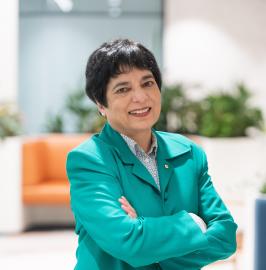
ACOLA, for its established ability to deliver interdisciplinary evidence-based research that draws on specialist expertise from Australia’s Learned Academies, convenes the SAF11 Expert Working Group (EWG) to guide the development of a targeted study that draws input from several disciplines to create a well-considered, balanced and peer-reviewed report.
The role of the EWG is to provide strategic oversight and provide expert input, analysis and provocative thinking.



This report has been reviewed by an independent panel of experts. Members of this review panel were not asked to endorse the Report’s conclusions and findings. The Review Panel members acted in a personal, not organisational, capacity and were asked to declare any conflicts of interest.
ACOLA gratefully acknowledges their contribution.




Project services provided by the Australian Academy of the Humanities on behalf of ACOLA



The Expert Working Group would like to express its gratitude to the individuals and organisations who have contributed to this project through interviews, the Brisbane and Adelaide focus groups, online survey and consultations. The names of those who agreed to be acknowledged are listed in this report under the section Evidence Gathering.
We would also like to express our sincere thanks to the members of ACOLA’s Project Steering Committee and especially its chair Professor Michael Barber, for its guidance and confidence in our work. We have much appreciated the support and advice of Professors Peter McPhee, Ruth Fincher, Graeme Turner and Paul Greenfield. We want to thank in particular Professor John Fitzgerald, the president of the Australian Academy of the Humanities, for his inspiration and commitment to this project.
We have also greatly benefitted from the helpful comments provided by Professor Ien Ang FAHA of the Institute for Culture and Society at Western Sydney University; Professor Peter Drysdale of the Crawford School of Economics and Government at The Australian National University; and Drs Helen Feist and George Tan at the University of Adelaide Australian Population and Migration Research Centre.
We are also very grateful for the support of the following: Mr Jeffery Wang; Ms Sonia Sadiq Gandhi; Mr Ravi Bhatia; Mr Matthew Benjamin; Ms Georgina Downer and AsiaLink’s Diplomacy, Business and Education divisions; Ms Andrea Myles and the Australia China Millennial Project; Mr David Douglas and the Australia China Youth Association; Mr James Keene and the Australia India Business Council; Dr Jane O’Leary and the Diversity Council Australia; Mr Tyler Zhang and the Brisbane Chinese Professionals Network; the Australia China Business Council, FC Business Solutions; India Link; and The University of Tasmania Alumni Association.
Our profound gratitude must also go to Dr Christina Parolin and Dr Kylie Brass of the Australian Academy of the Humanities both for their intellectual support and for providing support services on behalf of ACOLA. We also thank the other learned academies for their support of our research work — the Australian Academy of the Social Sciences, the Australian Academy of Science, the Australian Academy of Technological Sciences and Engineering. We acknowledge also the advice provided by Dr Will Howard on behalf of the Office of the Chief Scientist. We are grateful to the ACOLA Secretariat for its support, especially to Mr Andy Jones, Dr Renee Dutton and Ms Navi Randhawa. We would also like to thank the Institute for Culture and Society at Western Sydney University, the School of Humanities and Languages at the University of New South Wales and the Melbourne Graduate School of Education at the University of Melbourne for their administrative support.
We want to gratefully acknowledge also the authors of our two commissioned reports: Mr Johnathan Cheng and Dr Xuchun Liu. They provided information and analysis we needed in a most timely and effective manner. Acknowledged is Ms Cinden Lister editorial expertise, advice and efficiency; and Ms Kate Ritchie and Chin Communications for the Chinese translation of the Executive Summary. Enormously helpful also was the research assistance provided by Ms Kate Elliott. In the development of our online survey, thanks to Mr Allen Wang, Mr Qi Luo, Ms Hui Zhu and Ms Tengfang Zhang from the Monash University- Southeast University and Mr Ranjit Nadarajah who provided most useful feedback.
Finally, we would like to thank Dr Yasmin Tambiah, who as Project Manager did much of the administration and research for the project during its earlier stages, establishing the parameters of our work and steering us through its complexities. Her input has been immense, and we have greatly appreciated her expertise and guidance. However, working as we did within such a short time-line, this project would not have been possible without the immense contributions of our senior researcher, Dr Julia Evans, who not only conducted the interviews and collected most of the data, but also drafted much of the report, and all this in a manner that was always cheerful, collegial and highly professional.