

The panel argues that supporting transformational change in agriculture requires both the creative combination of multiple technologies and provision of institutional, regulatory and communications infrastructure to enable collaboration and innovation. Agriculture industries must work together as a cohesive sector to determine how best to capture and integrate provenance, production and environmental information to enhance product value and enable diversification, taking into account trends in consumer values and preferences.
The report examines the impacts of nine technologies on the agriculture sector. These technologies include sensors, internet of things, robotics, machine learning, large scale optimisation and data fusion, biotechnology, nanotechnology, and distributed ledger technology. These technologies present opportunities to improve the efficiency and profitability of agricultural production, to develop novel agricultural industries and markets, and to contribute to a range of social and environmental values.
ACOLA’s report is the fifth in the Horizon Scanning series, each report scopes the human implications of fast-evolving technologies in the decade ahead.
The project was supported by the Department of Agriculture, Water and Environment.
Historically, Australian producers have been rapid adopters of innovation, and these emerging technologies will help our agriculture sector to transform and tackle current and future challenges.
Dr Alan Finkel / Australia’s Chief Scientist
The aim of this horizon scan is to examine and understand the impacts, opportunities and challenges associated with around ten highly prospective technologies likely to impact agriculture over the next ten years and consider how Australian agriculture is positioned to meet them. This will include consideration of the role these technologies can play in helping Australian agriculture address the broader trends and pressures facing it, including:
- Climate variability and resilience
- Changing consumer preferences
- Workforce capacity
- Environmental and landscape sustainability
- Biosecurity
- Industry disruption
- Costs of production.
Each technology will be analysed within the following framework:
- What transformative role could the technology play in the agricultural sector?
- What are the social, cultural, economic, legal and regulatory implications of the technology?
- What is the role of ‘big data’ in the technology? Where relevant, examine issues of data integrity and standards and security and privacy.
- What is the role for government and industry in addressing challenges and facilitating uptake of opportunities, presented by the technology?

- Addressing the opportunities and challenges facing Australian agriculture requires transformative application of emerging technologies.
- 2. Australia’s agricultural technology and innovation ecosystem needs revitalisation to provide more opportunity for stakeholder involvement and to break down sectoral and disciplinary silos.
- The strength and resilience of Australia’s agricultural sector will be enhanced by supporting adoption of agricultural technology by Indigenous landholders.
- Technology development and adoption across Australian agriculture should include explicit consideration of buyer preferences and expectations.
- Appropriate policy settings are needed to enable technological implementation to move beyond incrementalism and support transformational change.
- Data are a powerful asset but will require appropriate national leadership and regulation to ensure their potential value to agriculture is realised.
- Empowering Australia’s regions through investment in local solutions and capacity will facilitate transformational change through agricultural technologies and will provide complementary social and economic benefits.
- Farmers and other agricultural workers need support to familiarise themselves with emerging technologies and to obtain the specialist skills required to maximise their use.
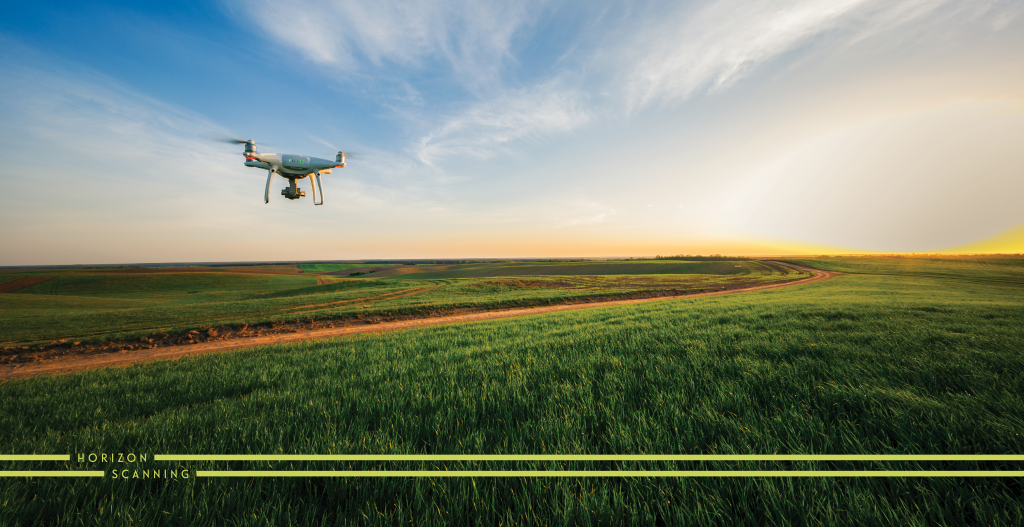
Australian agriculture is world-renowned for leadership in harvesting practices, water-efficient agronomy, crop and livestock breeding, conservation tillage and development of fit-for-purpose farm machinery. While Australia exports two-thirds of its produce it is a relatively small exporter when compared to countries like the United States and the Netherlands (M. Howden & Zammit, 2019). Nonetheless, our primary producers (or farmers) are among the most efficient in the world, with a long history of productivity improvement and adaptation to external challenges, including environmental extremes, price fluctuations, variations in international trade conditions and changes in government policy. Farmers have embraced innovation and shown willingness to adopt technologies that lead to improvements in farm practices. Governments, research providers and a range of other stakeholders have been critical to ensuring that the appropriate resources, policies and institutional arrangements are in place to support research, development and extension.
However, new and transformational approaches will be needed for the agriculture sector to remain productive and competitive in a changing natural, social and economic environment. The development of advanced technologies is critical to this transformation, but it is not by itself sufficient. Ensuring the suitability and adoption of advanced technologies requires consideration of the broader economic, social and environmental context for technology use.
This Horizon Scanning report examines impacts, opportunities and challenges associated with nine technologies: sensors, internet of things (IoT), robotics, machine learning, large scale optimisation and data fusion, biotechnology, nanotechnology, and distributed ledger technology.
These technologies present opportunities to improve the efficiency and profitability of agricultural production, to develop novel agricultural industries and markets, and to contribute to a range of social and environmental values. Transformational change of this nature will most likely occur when multiple technologies are applied together and their integration is underwritten by the power of big data and skilful analysis.
Methodology
A rigorous review process was conducted to explore key factors that could inform the adoption of future technologies, including the contextual and historical background of the Australian agriculture sector and the broader trends and pressures that the industry is facing. As a result of this review process, technologies were identified and examined against their potential to address broader trends and pressures over the next decade. Finally, the factors likely to determine and enable the uptake of agricultural technologies were investigated, including social, legal, regulatory and economic considerations. The outcomes of these investigations are summarised below.
Broader trends and pressures
The current prevailing drought across much of Australia highlights the importance of technological innovation as one of a range of strategies for coping with climatic and market variability. Over the coming decade, the pace and direction of innovation are likely to be influenced by:
- increasing prevalence and intensity of extreme weather events including droughts, floods, hail and frost as a consequence of climate change
- intensifying global competition as the adoption of new technologies in other countries increases the relative productivity and quality of their agricultural sectors
- biosecurity risks including exotic diseases and pests increasing as a consequence of climate change, global travel and trade
- demands from domestic and international buyers for assurance concerning the quality and safety of agricultural products, and the social and environmental impacts of agricultural products
- perceptions of risk associated with non-traditional methods of food production, which will influence consumer preferences.
Responding to these trends while ensuring a profitable and sustainable agricultural sector will demand step-changes in the productivity of Australia’s agricultural systems along with new business models and the development of new food and fibre industries.
Technology opportunities
The identified technologies may result in novel products; including new traits in existing crops and animals; new forms of nutrient-rich products; and the use of microbes to produce high-value plant metabolites for food and medical purposes. The deployment of advanced biotechnology solutions and digital technologies and devices will provide opportunities to increase profitability and production, global competitiveness, environmental quality, economic growth, and community wellbeing.
The deployment of advanced technologies, such as robotics, coupled with artificial intelligence (AI) and IoT, has the potential to generate vast amounts of data that will be transformational for farming practices, complex decision making and environmental monitoring. Advanced capabilities such as data fusion and machine learning will benefit farming practices and create new markets for on-farm capital – for example, through better forecasting of weather and natural resource strategies. On-farm sensors, devices, robotics and automation will allow agricultural workers to devote more time to complex tasks rather than to activities requiring low levels of skill.
Data, AI and IoT, if properly harnessed, will underpin many future farming capabilities, including asset automation and optimisation, supply chain optimisation, rapid testing of localised crops, and robotics. This will be enabled and driven by a reduction in cost and the increasing capability of computational hardware, communications and memory, coupled with increasing investment and capacity in software and algorithm development.
Sensors and blockchain technologies employed by primary producers, processors and retailers will enable quality assurance programs to verify and communicate the quality and ethical attributes of products. Leading to improved transparency of the environmental impacts, animal welfare and treatment of workers for consumers.
Biotechnologies have the potential to improve the resilience of crops and livestock to climate variability and to pests and diseases. Gene editing provides opportunities to cultivate new and improved products in agriculture.
Creating an enabling environment for transformational change
There will be a role for primary producers, government and industry to work together in establishing the environment that enables the development, uptake and success of new technologies.
The adoption of advanced agricultural technologies has the potential to provide the sector with new opportunities and to contribute to the economic wellbeing of regional and rural Australia. At the same time, potential for negative impacts on, for example, rural labour markets should be mitigated through provision of education and training opportunities.
Attitudes to technology and its adoption by primary producers are complex and multifactorial. Australian primary producers need a clear value proposition in order to be willing to adopt the new technologies. In addition, new and emerging technologies need to be viewed as fit for purpose in the Australian context, which will involve partnerships between technology developers, researchers, farmers and the broader community.
Consumer and broader community expectations and concerns are increasingly influencing the agricultural sector, these must be understood, especially for gene technologies. There is a need for greater transparency and consultation between primary producers, governments, industry and consumers to understand and raise awareness of new technologies.
Creating a national approach to the use of agricultural data will be a key enabler underpinning many technologies. Relevant considerations include privacy, surveillance and ownership of data between technology users and providers. Farmers should be active participants in all discussions and decisions in this domain.
Telecommunications is a key enabler for many prospective technologies. While regional and rural telecommunication infrastructure has improved over the last decade with new technologies being developed, there remain significant areas where connectivity is unreliable or suboptimal for the needs of future technologies.
Farmers already use a diverse range of skills and expertise to manage their complex businesses, equipment and current technology solutions. However, additional skills will be needed to maximise the value of new technologies and ensure their reliability. For example, up skilling in data literacy and knowledge to maintain or repair sensors will be essential to ensure the reliability and value from on farm data streams.
The future of Australia’s agriculture sector
New and emerging technologies have the potential to assist the agriculture sector to overcome a number of challenges and generate new products and market opportunities, increase rural and regional population as well as offer rural and regional communities economic and community benefits, including for Aboriginal and Torres Strait Islander businesses.
No single emerging technology will solve the challenges facing Australian agriculture. Supporting transformational change in agriculture requires both the creative combination of multiple technologies and provision of institutional, regulatory and communications infrastructure to enable collaboration and innovation. National leadership must:
- provide a platform for cross-sectoral and cross-disciplinary collaboration in research, development and innovation
- resolve regulatory and policy issues including the use of agricultural data
- prioritise construction of critical enabling infrastructure
- ensure sustained focus across the agricultural innovation system on long-term challenges and opportunities.
There is a role for all stakeholders, including the community, in the future prosperity of Australia’s agricultural sector. Governments, academia and industry all have roles in assessing and responding to consumer and public perceptions and attitudes; engagement with communities about their views and values relating to emerging technologies at all stages of the planning implementation cycle will be necessary.
Technology opens opportunities to explore new products and markets along with new or modified production systems. This is particularly important where agricultural businesses struggle with low profitability and return on investment.
Given the extent of landholdings now under Aboriginal and Torres Strait Islander control it is equally important that Indigenous landholders participate in technology development and adoption. Additional work involving, and preferably led by, Indigenous landholders, researchers and innovators will be critical to understanding this opportunity and its implications for the broader agricultural sector.
This report builds on two previous ACOLA reports on artificial intelligence and synthetic biology. The key findings identify cross-cutting themes, activities and actions to be considered in the development and application of new agricultural technologies, which address key challenges and opportunities, while mitigating risks. This will contribute to a thriving agriculture sector that meets domestic and international requirements over the coming decades and ensures profitability while considering and addressing social and environmental needs.
ACOLA gratefully acknowledges the following experts for their guidance:


Professor Rachel Ankeny
FASSA


Professor Alex McBratney
AM FAA
Emeritus Professor Elspeth Probyn
FAHA FASSA (1958 – 2025)
Professor Tania Sorrell
AM FAHMS

Professor Rachel Ankeny
FASSA
Professor Alex McBratney
AM FAA
Emeritus Professor Elspeth Probyn
FAHA FASSA (1958 – 2025)
Professor Tania Sorrell
AM FAHMS
ACOLA gratefully acknowledges the following experts for their contribution:





Dr Lauren Palmer
Executive Director at ACOLA
This project has been kindly supported by the Australian Government through the Department of Agriculture, Water and Environment.
ACOLA also gratefully acknowledges the contribution of our project stakeholders; Office of the Chief Scientist; Department of Agriculture, Water and Environment.

ACOLA and the Expert Working Group offer their sincere gratitude to the many experts from Australia and New Zealand who have contributed to the evidence gathering of this report by way of input papers. Further information of these contributions can be found in ‘evidence gathering’.
We also gratefully acknowledge the expertise and contributions from our project stakeholders. In particular, we would like to acknowledge Dr Alan Finkel, Lisa Kerr and Dr Penny Leggett from the Office of the Chief Scientist. We also thank our peer reviewers for the time and effort they have provided in reviewing the report.
We would like to thank Dr Kate Fairley-Grenot for her time and contributions as both an expert working group member and chair of the project from November 2018 to September 2019.
Our thanks to the EWG who put a great deal of time, effort, and insight into coordinating the report’s conceptualisation and production, and also to the ACOLA team, in particular Michelle Steeper, Dr Emily Finch, Dr Lauren Palmer and Ryan Winn who made significant contributions to supporting the EWG and managing the project.
As part of the evidence-gathering to support the development of the report, a call for input was sent to experts in the field. The development of the report has been made possible through their generous contributions. ACOLA and the Expert Working Group would like to sincerely thank the following people.
The views and opinions expressed in these input papers are those of the author and do not necessarily reflect the opinions of ACOLA.
- People and New and Emerging Technologies in the Australian Primary Industries Rebecca Paxton and Dr Emily Buddle
Internet of Things Frank Zeichner and Geof Heydon - Sensors and Internet of Things Professor Ian Woodhead
- Robotics, Machine Learning, Artificial Intelligence, Large Scale Optimisation and Data Fusion Professor Salah Sukkarieh
Autonomous Tractors Professor Craig Baille - Large Scale Optimisation and Data Fusion Dr Andrew Moore
- Machine Learning and Artificial Intelligence Associate Professor Richi Nayak
- Synthetic Biology Dr Hugh Goold
- Omic Technologies Professor Mohan Singh
- Microbial and microbiome technologies for the agriculture sector Dr Jasmine Grinyer and Professor Brajesh Singh
Prospective applications of nanotechnology in agriculture Professor Zhi Ping Xu - Economic and financial viability David Graham, Sapere
- Social and community implications of sensors, communications and computing Simon Feilke, Dr Emma Jakku, Aysha Fleming and Bruce Taylor
- Key legal and regulatory constraints of sensors, communications and computing Professor Leanne Wiseman
Social and community considerations of automation management technologies Professor Rob Sparrow and Dr Mark Howard - Legal and regulatory considerations of automation management technologies Professor Paul Martin
- Social and community considerations of biotechnology Dr Christopher Mayes
- Legal and regulatory considerations of biotechnology Professor Charles Lawson
- Agricultural Nanotechnologies, Public Engagement and Regulation Associate Professor Matthew Kearnes and Declan Kuch
- Legal and regulatory considerations of nanotechnology Scott Bouvier, Mark Beaufoy, James Ellsmore and Chloe Walker of King & Wood Mallesons
- Legal and regulatory considerations of nanotechnology Eleanor Pollock, Zoe Zhang, Jacob Ward and Professor Thomas Faunce
- Blockchain in Agriculture Professor Jason Potts