


There are considerable benefits in encouraging interdisciplinary research, particularly where the objective of the research is to achieve useful economic, social, environmental or cultural outcomes. The real world does not always present its problems and opportunities conveniently aligned with traditional academic disciplines, so mechanisms are needed to facilitate interactions and collaborations between researchers working in widely different fields.
Recommendation 1
Establish an agreed parsimonious classification which distinguishes the major kinds of interdisciplinary research.
Recommendation 2
Establish standard reporting systems to fully describe different kinds of interdisciplinary research, allowing them to be understood, assessed and learnt from.
Recommendation 3
Compile useful strategies into toolkits, providing a range of options for conducting different aspects of interdisciplinary research, such as synthesising knowledge, building trust and engaging with end-users.
Recommendation 4
Develop an effective system to collect data about the amount of interdisciplinary research of various kinds which is being undertaken.
Recommendation 5
Develop an effective system to collect data about the quality of different kinds of interdisciplinary research.Assess the best ways of educating the next generation, including the value of starting with a base in a discipline and determining which skills are relevant.
Recommendation 6
That ACOLA convene a workshop with key individuals from government, industry, philanthropy and research organisations to develop action plans for strengthening interdisciplinary research.
STRENGTHENING WHAT INTERDISCIPLINARY RESEARCH IS
1. Interdisciplinary research is now common. Although it is treated as a single entity, it comes in many different forms. Examples include a single researcher using ideas and methods from two or more disciplines, a researcher and industry end-user partnering to invent a new commercial process, and a team of natural and social scientists collaborating with community groups and policy makers to tackle a complex social and environmental problem like sustainability.
2 Australians influential in research policy and interdisciplinary research practice disagree about how interdisciplinary research is faring. Some maintain that it is well-established and appropriately funded. Others argue that it is marginalised and unsupported. Contrasting views arise from different underlying ideas about what interdisciplinary research is. A more accurate assessment of its status requires recognition and evaluation of the major categories of interdisciplinary research.
3 Potential core elements of a system for classification of interdisciplinary research include:
- difficulty of the problems tackled, especially the likelihood of clear-cut understanding or solutions;
- number and diversity of perspectives combined; n research units as individuals or teams;
- ways disciplinary insights are combined;
- degree of engagement with end-users to achieve policy, practice or technological innovation;
- power and standing of the various discipline and practitioner contributions; and
- institutional arrangements.
4 An effective classification needs to build not only on lessons from practice, but also on available theory, but at this stage the two largely operate in parallel, with few connections.
STRENGTHENING WHAT INTERDISCIPLINARY RESEARCH DOES AND HOW IT DOES IT
5. As well as disagreement about how interdisciplinary research is faring, there is also continued uncertainty about how best to conduct it. How should investigations be initiated, funded, managed, assessed and rewarded? The inability to be clear about what works is partly a consequence of the failure to distinguish between diverse kinds of interdisciplinarity. Determinants of success differ according to the characteristics of the interdisciplinary research, such as whether the investigation involves an individual researcher or a team, how numerous and diverse the perspectives being combined are, whether there is engagement with end-users and if these are from government, business or civil society.
6 There is also another problem which contributes to uncertainty about how best to conduct interdisciplinary research: poor documentation. In contrast to the disciplines, there are no standard procedures for reporting interdisciplinary research. Published accounts are invariably incomplete, making it impossible to fully understand and assess what occurred or to draw lessons for improving future investigations.
A six-question framework can help ensure that all the relevant elements (for any kind of interdisciplinary research) are considered and reported:
i. What is the interdisciplinary research aiming to achieve?
ii. What is being ‘combined’? (For example, which disciplines, which practitioner knowledge, which end-user perspectives and which different epistemologies, languages, cultures.)
iii. What is the context in which the interdisciplinary research is occurring?
iv. What is the decision-making process? v. How is the interdisciplinary research undertaken?
vi. What is the impact or outcome?
8 There is no single prescription for success. Instead, combining the classification of different types of interdisciplinary research with the six-question framework provides the foundation for toolkits of useful strategies. A variety of toolkits are required to cover different topics, such as methods for synthesising diverse kinds of knowledge (which can be used by individuals or teams), techniques for determining whether team members have important epistemological differences and how to deal with them, ways of building trust in different circumstances (such as when team members are co-located or spread across institutions, cities and even countries) and strategies for engaging with different kinds of end-users. For each topic the toolkit will provide a range of options pertinent to different circumstances and ideally they will be illustrated by case studies. Interdisciplinary researchers can then consult relevant toolkits to find ideas and methods that are most appropriate for their particular circumstances.
9. Policy to support and encourage interdisciplinary research currently involves ‘muddling through’. To be more effectively targeted requires progress on the issues of classification, documentation and development of toolkits. Attention must also be paid to measurement, quality, assessment and funding.
10 It is not currently possible to obtain a reasonable assessment of how much interdisciplinary research is being undertaken, let alone how much of different kinds.
11. The quality of interdisciplinary research is as important as the amount. While there is excitement about high quality in the form of ‘hybrid vigour’, there are also concerns that interdisciplinary research may be a ‘refuge for mediocrity’. Currently there is little solid evidence on which to determine whether concerns are well founded or to evaluate the many suggestions regarding requirements for ‘good’ interdisciplinary research. There are also few helpful answers about how best to educate future interdisciplinary researchers.
12 Until there is agreement about what constitutes high quality in different kinds of interdisciplinary research, effective assessment will continue to be difficult. Consideration must also be given to:
- impacts of current evaluations; n challenges faced by assessors;
- difficulties in recognising interdisciplinary innovation;
- difficulties in evaluating impact on policy, practice or technological innovation;
- challenges in evaluating what is reasonable and dealing with failure; and
- benefits of peer-review and establishing a college of peers.
13 Lack of data about quantity and quality prevents examination of critical questions concerning funding such as:
the actual and desirable balance in resources allocated to discipline-based and interdisciplinary research, as well as the balance across different kinds of interdisciplinarity;
- what kinds of funding best support different types of interdisciplinary research;
- what barriers funding can impose and how they can be removed; and
- how new funding mechanisms can avoid providing perverse incentives.
14 The main issues which need to be addressed in order to strengthen interdisciplinary research – classification, improved documentation, toolkits, data and agreement on quality – all require major investments, which are unlikely to be available in the short term. Nevertheless, there are a range of immediate and smaller-scale actions which can start to improve the situation. There are roles here for all the major players, separately and in combination: government, the full range of funders (including private industry and philanthropic organisations), research organisations and individual researchers.
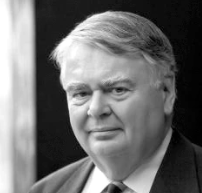



Professor Dennis Altman
FASSA Professor Dennis Altman is Professor Fellow in Human Security, La Trobe University. His major fields of expertise are the politics of sexuality and HIV/AIDS, and contemporary American politics. His recent research has involved questions of globalisation, and its impact upon sexuality and human rights.
Professor Stuart Macintyre
FASSA FAHA
Professor Sally Gras
FTSE
Professor Nick Martin
FAA FASSA FAHMS




Funded by an ARC Linkage Learned Academies Special Projects (LASP) grant ‘Making Interdisciplinary Research Work – Achieving a Sustainable Australia‘
Valuable input into the arguments and proposals presented was obtained from members of the Steering Committee, as well as from interviewees (“Australians influential in research policy and interdisciplinary research practice”) and others with whom less formal consultations were undertaken about particular issues addressed in the report.