

Utilising country comparisons, this project will analyse international best practice approaches to encouraging and facilitating research translation, commercialisation and collaboration. This will include an analysis of measures to facilitate collaboration between researchers, businesses and other organisations, focusing on government strategies as well as industry, institutional and sectorial approaches. The resulting report will make evidence based findings about how current levels of translation, commercialisation and collaboration in Australia could be improved and examine how international models could be applied in Australia.
The report provides an important evidence base for the development of new policy measures that can be used to increase the translation of Australian public sector research for economic and social benefit. Many of the examples provided in the report have been found to generate significant benefits.
“Fiddling at the margins of policy will not secure the economic transformation we need to keep pace, let alone compete in an ambitious world. Nations which do better than us are characterised by intelligent policies settings and programs which encourage a culture of innovation and collaboration.”
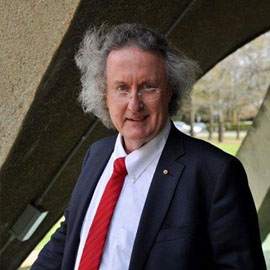
Professor Ian Chubb /
This report aims to analyse international approaches to lifting research translation and business-researcher collaboration in countries deemed to be leading practice, and examine their applicability for Australia.
Objectives
• Review approaches in selected countries and Australia in regard to commercialisation of research and support for collaboration, including a comparison of what works and why. The project will also review examples of what has not worked and look at underlying reasons.
• Examine how successful countries measure the impact of research in terms of translation and engagement.
• Determine the common barriers to research translation internationally, and how have these been successfully overcome in other countries (e.g. access to finance).
• Analyse the applicability of international models to the Australian context.
Finding 1. Australia can improve the translation of public sector research for economic and social benefit by establishing a stable suite of well-funded and sustainable, leading-practice measures.
Finding 2. Supporting SMEs and start-ups with high growth potential will help to increase the translation of public sector research in Australia.
Finding 3. Australia can make greater use of direct support measures for business innovation to increase research translation.
Finding 4. Australia’s business R&D tax incentive could be adjusted to encourage collaboration with public sector researchers.
Finding 5. Increasing funding for research collaboration programs and requiring rigorous engagement between the parties involved will increase research translation in Australia.
Finding 6. Measures to encourage public sector researcher engagement can be structured in ways that create opportunities for those in the humanities, arts and social sciences.
Finding 7. Australia can increase research translation through the placement of students and new graduates in business and other organisations.
Finding 8. Increased assistance for collaborative research will enhance translation in Australia.
Finding 9. Providing targeted incentives to Australian universities is a proven method of increasing their engagement with external parties.
Finding 10. Measures to support the financing of commercial outcomes from public sector research would address a major gap in Australia’s innovation system.
Finding 11. Greater use of innovation intermediaries would enhance collaboration and increase research translation in Australia.
Finding 12. Australia can emulate leading countries’ consistent support of successful research translation by adopting a coherent national strategy for innovation and establishing a national innovation agency to manage it.
Finding 13. Independent reviews and evaluations of research translation measures are necessary to ensure that they are achieving their objectives.
Finding 14. Streamlining internal university policies and procedures can improve university engagement with business and other external parties.
Finding 15. Assisting the development of research translation and entrepreneurial skills in Australia’s public sector research institutions will improve their performance.
The effective translation of public sector research lies at the core of Australia’s future competitiveness and prosperity. Research translation also provides societal and cultural benefits. This project has explored ways in which the translation of public sector research in Australian can be enhanced. Boosting the ways in which new ideas are disseminated and applied is an important priority in a modern knowledge-based economy, requiring increased levels of collaboration between researchers, businesses, not for-profits and the government sector.
To achieve these outcomes, Australia can leverage the skills and knowledge in public sector research institutions through collaborative research, driving closer engagement with other parties. Australia is undergoing a necessary economic transformation, transitioning from high dependence on natural resources to a knowledge-based economy. In order to secure Australia’s future, this transformation needs to be driven by innovation. Innovation relies on a number of factors, including strong engagement and collaboration between public sector researchers, business and other external counterparts. Improving this collaboration requires changes in policies and programs. Providing well targeted and funded incentives for each of the parties involved will not only increase research translation but will also bring about the cultural change necessary to make it a routine feature of research and business practice. This project has found that, to be fully effective, policies and programs to encourage increased research translation need to be part of a stable national innovation strategy and administered by an independent agency.
Public sector research is a critical part of Australia’s innovation system. Australian researchers perform well by international standards and some Australian universities are among the best in the world. However, no Australian university is ranked in the top 100 innovative universities worldwide. Engagement and research translation on the part of public sector researchers in Australia is low by OECD standards. This is despite Australian government funding for public sector research being slightly above the OECD country average. By comparison with other OECD countries, Australia’s research translation problems include:
• low collaboration between public sector researchers and business
• many public sector researchers not actively seeking involvement in translation activities
• a lack of demand on the part of business, industry and other potential users who are not motivated to engage
• a lack of effective intermediaries to facilitate links between public sector researchers and external parties.
This study has identified a number of reasons for these problems, including the absence of effective institutions, relationships and incentives. An analysis of Australian policies and programs commissioned for this report demonstrates that measures to support the translation of public sector research in Australia are fragmented, uncoordinated and under-resourced. Finland Slovenia Austria Hungary Sweden Belgium This report draws on the experiences of fourteen countries. These countries have been selected because of their strong performance in research translation, their novel approaches to encouraging translation and, in some cases, similarities with Australia. Most of the translation related measures that have been selected for particular analysis have a strong record of success over a number of years, have been favourably reviewed, and are considered to be appropriate and leading-practice models that could be adopted in Australia.
Contributing Reports
- Roessner, D (2015). Selected U.S. Measures to Promote the Transfer and Commercialisation of Public Sector Research. Report for Securing Australia’s Future Project.pdf
- Hughes, A (2015). Review of approaches to the commercialisation of university research and support for university industry collaboration in the UK. Report for Securing Australia’s Future Project.pdf
- Johnston, R (2015). A Study of Measures to Encourage the Translation of Public Sector Research for Economic and Social Benefit in Sweden. Report for Securing Australia’s Future Project.pdf
- Eden Strategy Institute (2015). Improving Commercialization of Publicly-Funded Research- Singapore. Report for Securing Australia’s Future Project.pdf
- Nomi, T (2015). Review of Japan’s Policy Measures for Public Research Commercialization. Report for Securing Australia’s Future Project.pdf
- Moshe, S (2015). A Study of Measures to Encourage the Translation of Public Sector Research for Economic and Social Benefit in Israel. Report for Securing Australia’s Future Project.pdf
- Johnston, R (2015). A Study of Measures to Encourage the Translation of Public Sector Research for Economic and Social Benefit in Germany. Report for Securing Australia’s Future Project.pdf
- Johnston, R (2015). A Study of Measures to Encourage the Translation of Public Sector Research for Economic and Social Benefit in Finland. Report for Securing Australia’s Future Project.pdf
- Johnston, R (2015). A Study of Measures to Encourage the Translation of Public Sector Research for Economic and Social Benefit in Denmark. Report for Securing Australia’s Future Project.pdf
- Gao, Y (2015). Measures that facilitate transfer of knowledge from publicly funded research organisations to industry in China. Report for Securing Australia’s Future Project.pdf
- Chávez , C (2015). A Study of Measures to Encourage the Translation of Public Sector Research for Economic and Social Benefit in Chile. Report for Securing Australia’s Future Project.pdf
- Botelho, A & Alves, A (2015), A study of measures to encourage the translation of public sector research for economic and social benefit in Brazil. Report for Securing Australia’s Future Project.pdf
ACOLA, for its established ability to deliver interdisciplinary evidence-based research that draws on specialist expertise from Australia’s Learned Academies, convenes the SAF09 Expert Working Group (EWG) to guide the development of a targeted study that draws input from several disciplines to create a well-considered, balanced and peer-reviewed report.
The role of the EWG is to provide strategic oversight and provide expert input, analysis and provocative thinking.




This report has been reviewed by an independent panel of experts. Members of this review panel were not asked to endorse the Report’s conclusions and findings. The Review Panel members acted in a personal, not organisational, capacity and were asked to declare any conflicts of interest.
ACOLA gratefully acknowledges their contribution.




Project services provided by the Australian Academy of Technology and Engineering on behalf of ACOLA




The Expert Working Group is grateful to the experts who contributed to this Project through participating in discussions, a workshop and written inputs. The names of people who contributed to the workshop and consultations are listed under Evidence Gathering.
We also wish to thank Professor Ron Johnston FTSE, Australian Centre for Innovation (ACIIC), who facilitated the workshop and provided advice on drafting and content.
Project management services were provided by the Australian Academy of Technological Sciences and Engineering (ATSE) — Sarah Parker, Dominic Banfield, Dr Matt Wenham and Dr Milla Mihailova — on behalf of the ACOLA Secretariat. These contributions are gratefully acknowledged.
The Expert Working Group thanks Dr Simon Prasad, Office of the Chief Scientist, for guidance and advice throughout the project, and the ACOLA Secretariat for their assistance.