

The transformation of Australia’s energy system is one of the most complex national transitions underway. Achieving net-zero emissions will require coordinated changes across technology, infrastructure, markets, policy and society.
This research briefing paper examines the dynamics of Australia’s energy system during the transition to low-emissions energy. It focuses on three critical areas: the development of new energy technologies, the pathways through which they will be deployed, and the integration of these technologies into existing systems and infrastructure.
Drawing on domestic and international research, the report identifies key opportunities for Australia to leverage its strengths in renewable resources, critical minerals and energy innovation. It also highlights major research gaps related to grid integration, infrastructure investment, policy frameworks and system modelling.
Together, these insights provide guidance for researchers, policymakers and industry on where targeted research and collaboration are most needed to accelerate Australia’s energy transition.
This report aims to identify the most important research questions and knowledge gaps relating to Energy System Dynamics, one of the three research priorities identified in the Australian Energy Transition Research Plan.
Specifically, the report seeks to:
- Review existing Australian and international research on energy system transformation.
- Identify research gaps that could slow the transition to a low-carbon energy system.
- Highlight research opportunities across technology, system integration and transition pathways.
- Provide guidance on where future research investment and collaboration should be directed.
By mapping current knowledge and emerging challenges, the report helps inform national research priorities needed to support Australia’s transition to net-zero emissions by 2050.
The report identifies several critical insights about the research and policy challenges shaping Australia’s energy transition.
1. Energy technologies must scale rapidly
Low-emissions technologies such as renewable generation, energy storage, hydrogen and carbon capture will play a central role in the transition. However, their deployment requires coordinated research, supportive policy settings and significant investment to scale effectively.
2. Systems integration is a major challenge
As renewable energy expands, integrating variable energy sources into electricity systems will become increasingly complex. Research is needed to address issues such as grid stability, storage integration, transmission planning and interactions between multiple technologies.
3. Policy frameworks strongly influence innovation
Government policy and financial incentives play a critical role in encouraging technological innovation and investment. Clear and responsive policy frameworks are essential to reduce investment risk and accelerate the adoption of low-emissions technologies.
4. Australia has unique opportunities in the clean energy economy
Australia’s abundant renewable resources, critical minerals and proximity to Asia position it well to develop industries such as hydrogen exports, low-emissions metals and clean energy technologies.
5. Infrastructure and investment must keep pace with transition needs
Grid connection, transmission capacity and energy infrastructure investment are emerging bottlenecks. Planning tools and modelling approaches must evolve to guide infrastructure development and investment decisions.
6. System modelling and scenario analysis are essential
Understanding the potential pathways to net zero requires improved modelling of energy systems, including technology costs, demand patterns, infrastructure constraints and social impacts.
7. Digital technologies will reshape the energy system
Digital platforms, data sharing and distributed energy technologies are transforming how electricity is produced, managed and consumed. While these innovations offer benefits for efficiency and resilience, they also introduce new governance, cybersecurity and data-management challenges.
8. Social and economic impacts must be considered
Successful energy transitions depend not only on technology, but also on public participation, social acceptance and equitable economic outcomes across regions and communities.
This Energy System Dynamics research briefing paper is the first of three reviewing existing research and exploring research opportunities for the energy transition in Australia. The three Research Priorities of Energy System Dynamics, Social Engagement Dynamics and Transition Dynamics were identified in The Australian Energy Transition Research Plan (Research Plan) developed by the Australian Council of Learned Academics (ACOLA). This paper discusses the technologies required to support the transition, how they will be integrated, the pathways for their deployment, and the associated retirement of legacy energy systems.
Australia is well-positioned to benefit from innovation in low emissions technologies and to become a significant exporter of hydrogen, low- and zero-emissions metals, and critical minerals. However, existing policies are insufficient, and governments have a critical role in removing regulatory barriers for innovation and investment and addressing other obstacles for competition. There is a vital need for a better understanding of the window of opportunity for different energy storage technologies to compete with falling battery prices, as highlighted by the Australian Low Emissions Technology Roadmap (LETR).
Researchers play a critical role in modelling feasible scenarios for transition pathways for reaching net-zero by 2050. This requires defining specific criteria and accounting for key uncertainties with quantitative and qualitative methodologies.
Understanding the societal, economic and environmental impacts of these pathways will require the development of comprehensive indicators and other measures of success in the transition. There are many unknowns regarding the scaling conditions of different pathways, with research required to understand optimal technology scaling levels and identify the support needed to achieve it.
Systems integration has been extensively investigated in domestic and international literature given the urgent need to integrate Variable Renewable Energy (VRE) into the grid. Yet the interactions between multiple technologies must be investigated in more detail to maintain quality, flow, stability and balance. Though the Australian renewable energy industry has been progressing rapidly, it will need to overcome ongoing grid connection and transmission challenges. Research is required to understand how much the existing infrastructure can support the transition, and how to allocate investment to overcome these challenges. If integrated well, digital emerging technologies have great potential for both consumers and the power network, though more research is needed to mitigate their associated technical, social and security concerns.
In pursuing research on Energy System Dynamics, a mix of urgent and more strategic local and international research across all of the disciplines will need to be pursued, including multidisciplinary and interdisciplinary considerations. The energy transition needs to happen at a rapid pace and scale, and insights derived from this project and the Research Plan will provide critical knowledge for further and future domestic and global transitions.
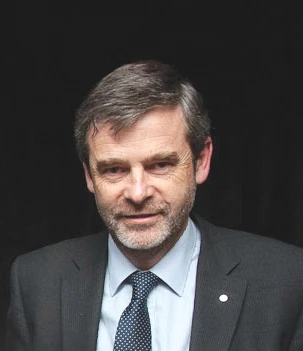

Emeritus Professor Sue Richardson
AM FASSA


Emeritus Professor Kenneth Baldwin
FTSE Emeritus Professor of Research School of Physics at The Australian National University
Distinguished Professor Fran Baum
AO FAHMS FASSAFern Beavis